Table of Contents:
Introduction
Step 1: Know Thyself
Step 2: Know Your Customer
Step 3: Determine Your Content Marketing Goals
Step 4: Search Engine Optimization
Step 5: Perform a Content Inventory
Step 6: Content Mapping
Step 7: Creating Content
Step 8: The Right Content in the Right Channel
Step 9: Measuring Your Content Strategy’s Success
Some Final Thoughts
If you hoped to jump right into writing or storyboarding videos, we’re not there yet. We still have several decisions to make regarding our content. Everything you’ve done up to this point has been part of the homework phase of your content strategy. It’s also part of what we call Content Mapping.
There are varying definitions of what Content Mapping is and what’s involved in a Content Mapping exercise. Some consider all of the things we’ve discussed up to this point as part of Content Mapping, culminating in the Content Strategy you roll out.
I prefer to think about Content Mapping as more of an endpoint. Mapping takes all of the data we’ve gathered and uses it to plot out the types of content we need and where to publish it.
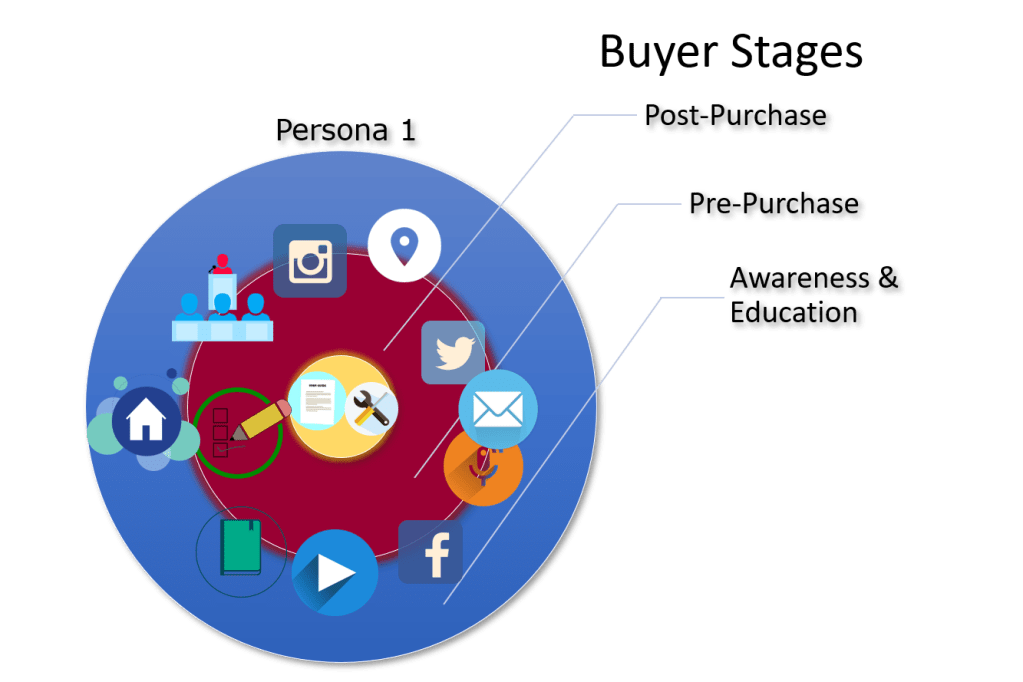
Take the work we’ve done so far. So far, we’ve identified:
- Personas targeted
- Funnel stage
- Top of Funnel: Pre-purchase Awareness Stage content that helps buyers evaluate your products and services.
- Middle of the funnel: Pre-Purchase Decision-Making content that helps them cognitively make the purchasing decision (offer-based email, post-purchase” support content such as support materials and user guides).
- Bottom of the funnel: Purchase and Post-Purchase content that specifically supports the buyer’s needs.
- What channels we need to publish our content in.
- How it will be consumed (read, watched, or listened to).
In turn, this informs the types of content we need to create:
- Videos
- Blogs
- Podcasts
- Trade articles/thought leadership
- Original research
- Interactive content (calculators, demos, surveys)
- User guides
- Social media content
- Infographics
- eBooks
…the list goes on. As you look at your new content map and compare it against your content inventory, you will find you already have content you can use in certain places. You’ll probably still need new content, but maybe you can update some existing content giving you a head-start.
How you build your Content Map is completely dependent on your business, your customer personas, and the channels your customers are best reached in. A good starting point is a structure similar to the Content Inventory, removing or adding fields as needed.

 Marcom Today - Portfolio site of Chris Souther